Next Batch: November 29, 2026 • 50% Scholarship
Next Batch Starts: November 29, 2026Free Webinar:

The EA syllabus has three exam parts. Each part covers one area of US tax. The exam checks how well you understand the topics and how you apply them in practical tax situations.
Exam Format
100 multiple choice questions in each part
Duration
3.5 hours for each part
Passing Score
105 on a scale of 40 to 130
Syllabus Source
Set by the IRS for the Special Enrollment Examination (SEE)
The EA syllabus focuses on US taxation and IRS procedures. It prepares you for tax preparation and compliance and representation work.
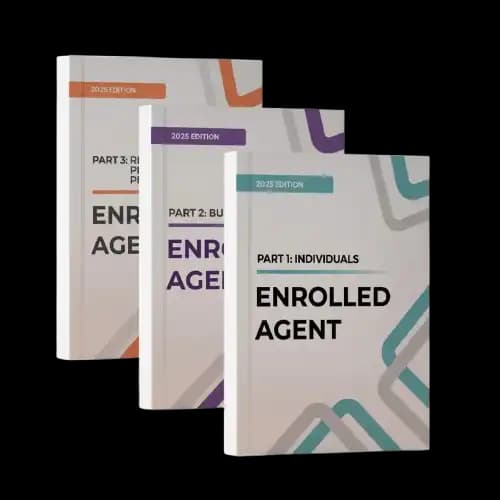
Download our updated EA study material and syllabus and exam guides and practice questions for all three SEE parts.
IRS-Focused Learning for Specialized Tax Professionals
Professionally Relevant Curriculum
The EA syllabus is all about US tax and IRS rules. It prepares you for tax preparation and compliance and IRS representation work. It covers tax for individuals and for businesses.
You can represent eligible clients before the IRS.
Employers value EAs in US tax roles.
A credential made specifically for US taxation.
Key subject areas covered
The EA is one of the most focused ways into a US tax career.
Why EA suits people who want a career in US tax.
| Aspect | EA (Enrolled Agent) Syllabus | Traditional Accounting Courses |
|---|---|---|
| Learning Approach | Focused on US tax and IRS rules | Covers general accounting subjects |
| Primary Focus | The right to represent eligible clients before the IRS | A course alone does not give this right |
| Key Skills | Practical tax filing, advice, and IRS procedures | General accounting and tax theory |
| Career Outcome | A professional US tax credential | Broader academic and accounting qualifications |
🚀 The EA syllabus builds practical knowledge for US taxation and IRS representation roles.
A good fit at every stage of your career
A way into US tax careers.
For people who already work in taxation.
For those who want to focus on US tax.
For people who want US tax roles.
Still unsure? Find clear answers to the questions students ask most.